
The implementation of the Coretax Administration System (CTAS) introduces a significant transformation in the corporate annual tax return (SPT Tahunan Badan) filing mechanism in Indonesia starting from Fiscal Year 2025. This article reviews the transition from DJP Online to the more integrated, automated, and transparent CTAS platform, highlighting changes in data entry processes and SPT attachments. Key points discussed include the mandatory mapping of the company’s Chart of Accounts (COA) to the system’s standard structure, automatic withholding tax integration, and the procedures for submitting new XML-based attachment formats. In addition, the article underscores the importance of synchronizing financial data with fiscal requirements to strengthen good corporate governance. Amid these technical complexities, the role of tax consultants becomes critical in supporting corporate adaptation to the new digital regulatory framework. Ultimately, mastering the CTAS system is not merely an administrative obligation but a strategic step for businesses to ensure accurate and efficient compliance, thereby fostering a more conducive investment climate in Indonesia.
In line with the digital transformation of tax administration that has been discussed in the previous article, the implementation of the Coretax Administration System (CTAS) also brings significant changes for Corporate Taxpayers in carrying out their tax obligations. This integrated tax administration system is designed to accommodate the increasingly diverse complexity of business transactions, while ensuring that the tax reporting and payment process can be carried out in a more transparent, accurate, and well-documented manner.
CTAS is expected to make things easier for taxpayers through integrated services, automation, and efficiency. This system offers faster tax return reporting, real-time tracking, the use of National Identity Number (“NIK”) as Taxpayer Identification Number (“NPWP”), and payment integration, making the tax process simpler and more transparent.
For companies operating in Indonesia, the existence of CTAS is not only an administrative tool, but also part of good corporate governance. This system allows synchronization of tax data with the company’s financial statements, so that every tax obligation can be traced systematically. This is especially important for companies that have complex organizational structures and cross-functional transactions.
Companies in Indonesia are required to use CTAS for reporting the Annual Corporate Tax Return for the 2025 Tax Year. The transition of the tax system from DJP Online to CTAS has caused changes in the reporting flow, filling in data, and attachment of Annual Tax Returns.
Here are some of the changes contained in the Annual Tax Return form of the Agency:
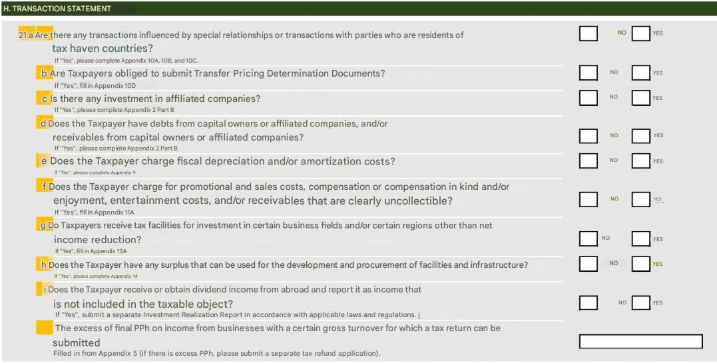
- More Complete Transaction Statement Section
There are ten transaction statements that affect the completion of the Annual Corporate Tax Return attachment:
- Financial Statements and Chart of Accounts (COA)
The Corporate Annual Tax Return form on CTAS presents a financial statement format that has been adjusted to the characteristics of the Taxpayer’s industry. The financial statements are presented specifically in accordance with the appendices available on CTAS. This requires Taxpayers to map their accounting COA to the COA available on CTAS.
Financial statement input is done manually by filling in the numbers on each COA in CTAS, accompanied by the fiscal correction value. This aims to help identify tax objects more systematically.
- Withholding Slip as an Integrated Tax Credit
Withholding Tax Slip is automatically available on CTAS as long as the transaction counterparty has submitted a report. However, Taxpayers should double-check the details of the withholding slip on the CTAS to ensure that the withholding slip is correct.
- Changes to the Annual Tax Return Attachment
In CTAS there is an additional menu attached to the Annual Tax Return. Previously, the attachment of the tax return was prepared separately and uploaded at the time of reporting. However, with CTAS, Taxpayers can input attachments by downloading the attachment file provided in XML format on CTAS. After filling in the information, the Taxpayer can re-import the attachment back into the system.
The appendices include, among others:
- Nominative list of promotional and sales costs as well as reimbursement or rewards in the form of in-kind and/or enjoyment
- Nominative list of entertainment expenses
- List of receivables that are clearly uncollectible
- Details for Taxpayers who give in-kind and/or enjoyment
- List of Non-Performing Loan (NPL) debtors
In the process of adapting to this new system change, the role of tax consultants has become increasingly important in helping companies understand the technical and administrative changes that occur. Tax consultants not only function as representatives in reporting, but also as strategic partners in ensuring tax compliance that is aligned with accounting practices and applicable fiscal provisions.
Through proper assistance, tax consultants contribute to creating a healthy and sustainable tax ecosystem. Company compliance in fulfilling tax obligations not only provides legal certainty for business actors, but also supports the stability of state revenue. This role is filled by SW Tax Consulting as Indonesia’s Investment Gateway.
In the end, the synergy between Corporate Taxpayers, tax consultants, and tax authorities will encourage the creation of a conducive investment climate in Indonesia. Therefore, increasing literacy in the use of CTAS is a strategic step for companies that invest and operate in Indonesia.
An adequate understanding of the digital tax administration system will help companies carry out their tax obligations in a timely, accurate, and efficient manner. It is expected to support business continuity in a competitive and regulatory compliant business environment.