Insights

PSAK 118 (IFRS 18): Business and Investment Implications

PSAK 118 (IFRS 18) introduces significant changes in the presentation of the statement of profit or loss in a more structured and transparent way. The standard improves comparability and the quality of information for investors and stakeholders. Key changes include classification of income and expenses and more consistent subtotals. Its implementation affects how companies communicate … Read more

PSAK 118 (IFRS 18): Presentation and Disclosure in Financial Statements

PSAK 118 is an accounting standard designed to enhance the quality, transparency, and comparability of financial statements through a more structured presentation and disclosure framework. The standard requires classification of income and expenses into operating, investing, financing, tax, and discontinued operations categories, along with consistent presentation of key performance subtotals. It also strengthens aggregation and … Read more

PSAK 118 (IFRS 18): Implementation for Investment and Retail Banks

PSAK 118, effective 1 January 2027, replaces PSAK 201 and restructures financial statement presentation. It classifies income and expenses into operating, investing, financing, tax, and discontinued operations categories. The standard requires consistent subtotals to improve comparability across entities. It also introduces Management-Defined Performance Measures (MPM) disclosures for transparency. Its implementation affects all industries, including investment … Read more

PSAK 118 (IFRS 18): Implementation on Insurers

The evolution of financial reporting in the Indonesian insurance industry continues with the introduction of PSAK 118 (IFRS 18), effective from 1 January 2027 as a new standard on financial statement presentation and disclosure. Unlike PSAK 117, which focuses on insurance contract measurement, PSAK 118 emphasizes how financial performance is presented and communicated to users … Read more

PSAK 118 (IFRS 18): The Assistance of Independent Advisors

The implementation of PSAK 118 (IFRS 18 adoption) introduces a significant transformation in financial reporting architecture that goes beyond technical requirements, fundamentally influencing how corporate performance is communicated to stakeholders. For complex organizations such as state-owned enterprises and large business groups, the standard creates challenges in classifying operating, investing, and financing activities, as well as … Read more

SW NIHAO Newsletter Edition July 2026

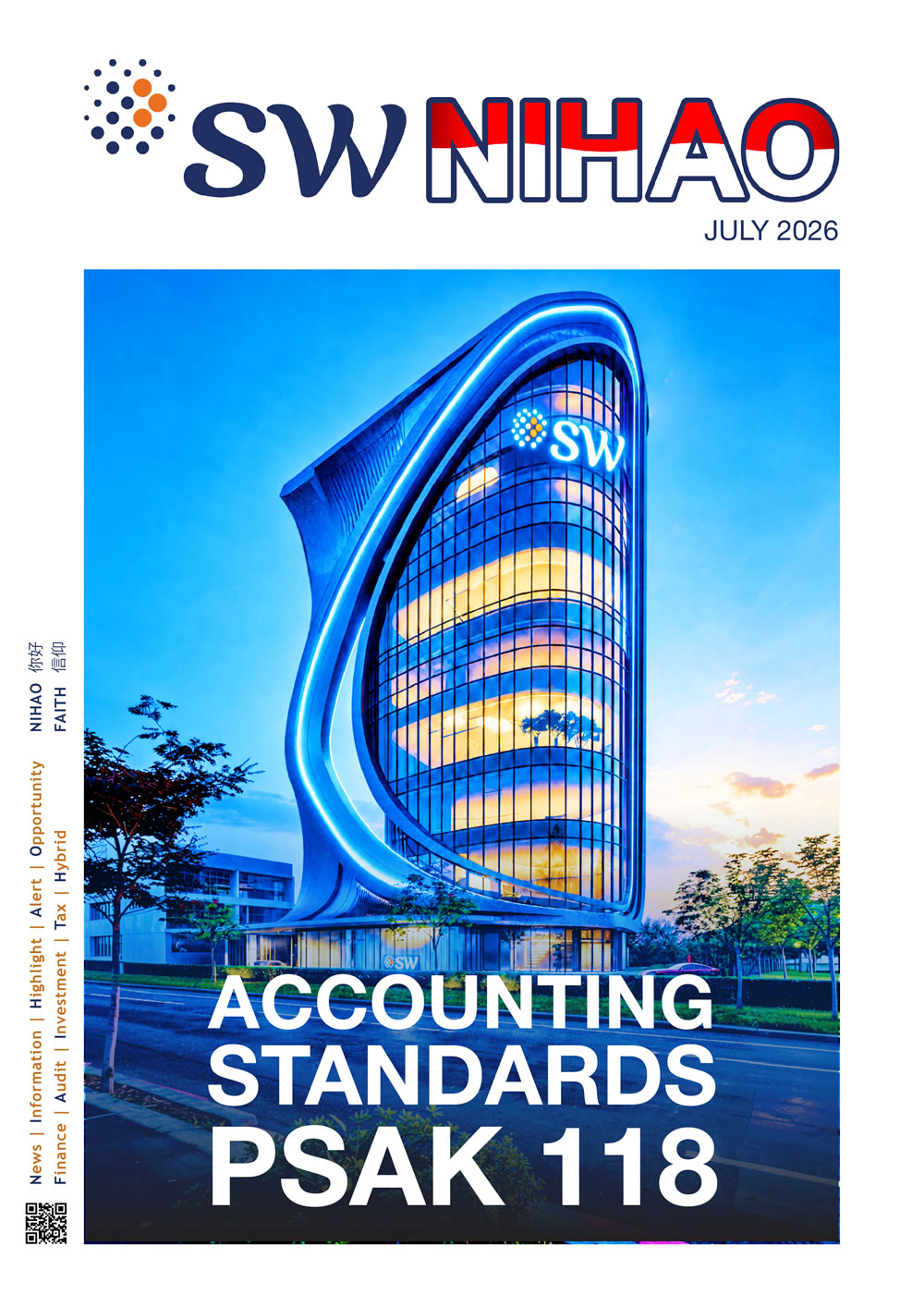
ACCOUNTING STANDARDS PSAK 118 PSAK 118 (IFRS 18):Business and Investment ImplicationsPSAK 118 (IFRS 18):对商业与投资的影响PSAK 118 (IFRS 18):Implikasi Bisnis dan Investasi PSAK 118 (IFRS 18):Presentation and Disclosure in Financial StatementsPSAK 118 (IFRS 18):财务报表中的列报与披露PSAK 118 (IFRS 18):Penyajian dan Pengungkapan dalam Laporan Keuangan PSAK 118 (IFRS 18):Implementation for Investment and Retail BanksPSAK 118 (IFRS 18):在投资银行与零售银行的实施PSAK 118 (IFRS 18):Implementasi … Read more

REGULATION OF THE MINISTER OF TRADE NO. 19 OF 2026 INTRODUCES NEW OBLIGATIONS FOR DIGITAL PLATFORMS, INCLUDING FEE TRANSPARENCY, PRIORITIZATION OF DOMESTIC PRODUCTS, AND AI LABELING REQUIREMENTS

The Minister of Trade has issued Minister of Trade Regulation Number 19 of 2026 on the Implementation of Trade Business Through Electronic Systems (“MOT Regulation 19/2026”), which came into effect on 8 June 2026. This regulation simultaneously revokes the  Regulation of the Minister of Trade Number 31 of 2023, which previously governed the same sector. … Read more

DIRECTOR GENERAL OF TAXES REGULATION NUMBER PER-6/PJ/2026 ON PROCEDURES FOR THE EXERCISE OF RIGHTS AND THE FULFILLMENT OF OBLIGATIONS RELATING TO THE GLOBAL MINIMUM TAX BASED ON AN INTERNATIONAL AGREEMENT

The Director General of Taxes Regulation regarding the Global Minimum Tax (Global Anti-Base Erosion Rules/GloBE) is an implementation of the OECD/G20 Inclusive Framework on BEPS agreement to ensure that multinational enterprise groups (MNE Groups) are subject to a global minimum tax. This regulation governs various aspects, ranging from the determination of GloBE taxpayer status, reporting, … Read more

Finance Company Sustainability

Sustainable finance portfolio strategy has become increasingly important for financing companies in managing long-term risks and maintaining competitiveness. Sustainability is no longer merely a reporting obligation, but a strategic approach to directing portfolio composition and financing decisions. Companies need to integrate ESG factors through portfolio mapping, classification, risk integration, and performance measurement. Global trends such … Read more