

IPO provides broader access to funding, enhances credibility, and promotes the implementation of good corporate governance. However, the process requires comprehensive preparation, including financial, legal, operational, and investor communication aspects. The IPO journey consists of strategic planning, internal preparation, transaction execution, and post-IPO obligations. Each phase requires careful planning and professional support. The implementation of Good Corporate Governance is a key factor in building market trust. Overall, an IPO acts as a catalyst for business transformation toward sustainable growth and global competitiveness.
In the journey of a company’s growth, there is an important moment that often becomes a major milestone, namely the Initial Public Offering (IPO) or the process of offering shares to the public for the first time. Through an IPO, a company not only gains access to broader funding sources, but also opens a new chapter as an organization that is more transparent, professional, and has higher competitiveness at both national and global levels.
However, the process towards an IPO is not a simple step. Companies must prepare various aspects, starting from corporate governance, financial reporting systems, legal readiness, to communication strategies with investors. This process requires careful planning as well as assistance from parties who have experience in the capital market sector.
Why IPO Becomes a Strategic Step?
For many companies that want to grow larger, an IPO often becomes one of the main strategies to strengthen business position while opening access to long-term funding sources. Some of the main benefits of an IPO include:
- Business Growth Acceleration
By becoming a public company, the company has access to broader and sustainable funding sources through the capital market. Funds obtained from the IPO can be used for various strategic needs, such as:
- market expansion
- development of products and services
- investment in technology and infrastructure
- strengthening working capital
This funding becomes an important foundation for companies to accelerate business growth sustainably.
- Improvement in Governance Standards
Companies that are listed on the stock exchange are required to consistently implement Good Corporate Governance (GCG). This includes transparency in financial reporting, stronger management oversight, as well as more structured risk management systems. The implementation of good governance will increase investor confidence and the company’s credibility in the market.
- Improvement in Company Credibility
The status as a public company provides a positive signal to the market that the company has higher stability and transparency because it is under the supervision of capital market regulators. This often increases trust from various parties, including customers, business partners, vendors, and investors.
- Liquidity for Shareholders
An IPO also provides an opportunity for initial shareholders, including company founders and early investors, to have more liquid assets with transparent market value. With stock trading on the exchange, share ownership can be traded openly in accordance with market mechanisms.
Roadmap Towards IPO
The process towards an IPO generally requires a relatively long preparation time. To ensure the process runs well, the preparation stages are usually divided into four main phases.
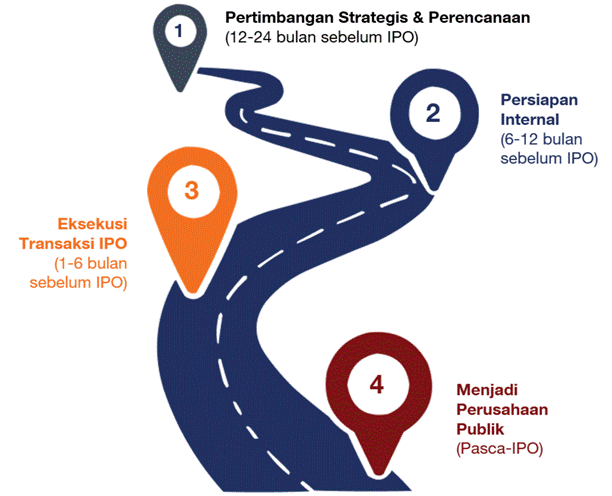
Figure 1. IPO Roadmap
Phase 1: Strategic Consideration and Planning (12–24 Months Before IPO)
This initial stage focuses on assessing whether an IPO is the right strategy for the company. In addition, the company also begins to prepare various important foundations before entering a more in-depth preparation stage. Some of the main activities in this phase include:
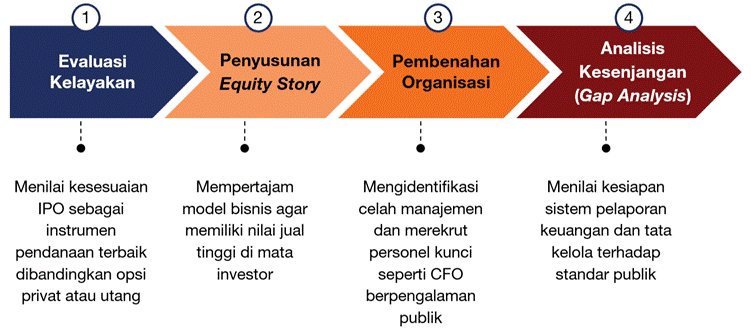
Figure 2. Strategic Consideration and Planning Phase
Phase 2: Internal Preparation (6–12 Months Before IPO)
This stage is often referred to as the “internal clean-up” stage, which is the process of organizing various internal aspects of the company to meet the standards of regulators and the capital market. The main steps in this stage include:
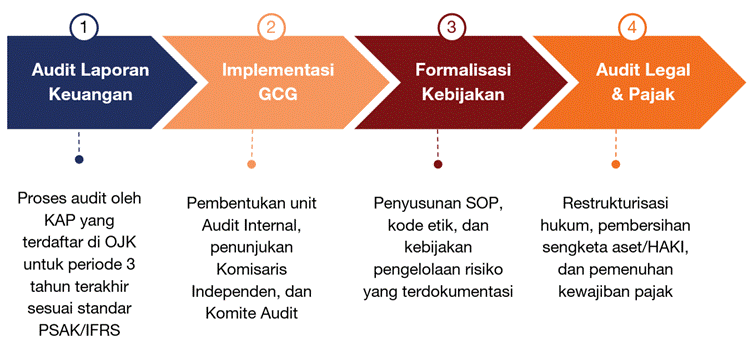
Figure 3. Internal Preparation Phase
Phase 3: IPO Transaction Execution (1–6 Months Before IPO)
At this stage, the company begins to carry out the IPO process formally by involving various professional parties that support the process of listing shares on the stock exchange. The stages carried out include:
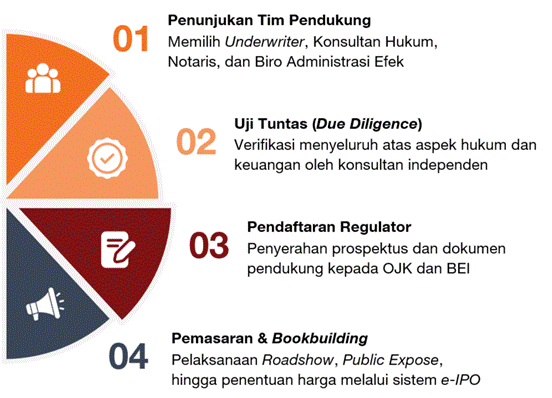
Figure 4. IPO Process
Phase 4: Becoming a Public Company (Post-IPO)
After the IPO is successfully carried out, the company officially becomes a public company and has various new obligations related to transparency and reporting to regulators and investors. Some of the main obligations of a public company include:
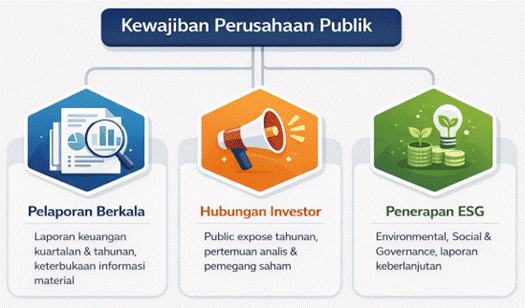
Figure 5. Obligations of Public Companies